Bitcoin Guide: Data Tools for Savvy Crypto Market Insights
16h
IT
www.quotidianopiemontese.it
Bitcoin Meteo
Media Coverage of Bitcoin
Attention to Bitcoin in local and national media is increasing, with a data-oriented approach to explaining digital assets. Coverage emphasizes balanced presentation of value, trading, and technological infrastructure, using accessible language and verifiable facts to demystify cryptocurrency mechanisms without narrative biases. This fosters digital literacy in an economy blending traditional and innovative tools.
Exchange Platforms and Market Insights
Online exchange platforms like Binance are key references for transactions, publishing data on prices, volumes, and liquidity. Common search terms include “bitcoin valore dollari” and “Binance,” often linked in analyses of quotations and trading volumes. Graphs, tables, and timelines aid structured understanding for non-experts, reducing misunderstandings and promoting progressive concept comprehension.
Critical Consumption of Bitcoin Information
To navigate online Bitcoin content, adopt a critical method: distinguish informative sources from opinion or promotional ones, verify data context (e.g., time frames, origins), and scrutinize language for precision, avoiding vague or emphatic terms. Separate facts from interpretations and cross-reference multiple sources. Common errors include relying on single outlets, superficial data reading, confusing short-term updates with long-term trends, ignoring publication dates, and mixing info with ads. Quotidiano Piemontese advises methodical verification for informed autonomy.
Bitnomial Launches Trailblazing US Aptos Futures Exchange
16h
EN
www.tradingview.com
Bitcoin Meteo
Chicago-based crypto exchange Bitnomial has launched monthly futures contracts for Aptos’ native token (APT), the first APT derivatives product regulated under US oversight by the Commodity Futures Trading Commission (CFTC). Available to institutional clients via clearing members, retail access will follow soon through Bitnomial’s Botanical platform. Contracts feature monthly expirations and settle in US dollars or APT, enabling traders to gain price exposure without holding the asset. Bitnomial president Michael Dunn stated that regulated futures are a prerequisite for spot crypto ETF approval under SEC standards, allowing institutions to use the same infrastructure as for Bitcoin (BTC) and Ether (ETH), including portfolio margining.
This marks Aptos’ first CFTC-regulated derivatives market, contrasting with offshore products available to US traders. US-regulated crypto futures beyond BTC and ETH remain limited, with Bitnomial as a key venue for altcoin futures amid a complex regulatory landscape. In August 2024, Bitnomial filed for XRP futures via CFTC self-certification but faced SEC challenges requiring securities exchange registration. After suing the SEC in October 2025 and dropping the case in March, Bitnomial launched regulated XRP futures that month, citing evolving SEC policies.
Other exchanges progressed incrementally: Coinbase Derivatives Exchange launched institutional BTC and ETH futures under CFTC in June 2023, expanding to retail in May 2025. Kraken debuted a US derivatives platform in July 2025 for CME-listed crypto futures and offers APT perpetuals globally. In March 2025, Kraken announced a $1.5 billion acquisition of NinjaTrader to bolster CFTC-registered derivatives capabilities.
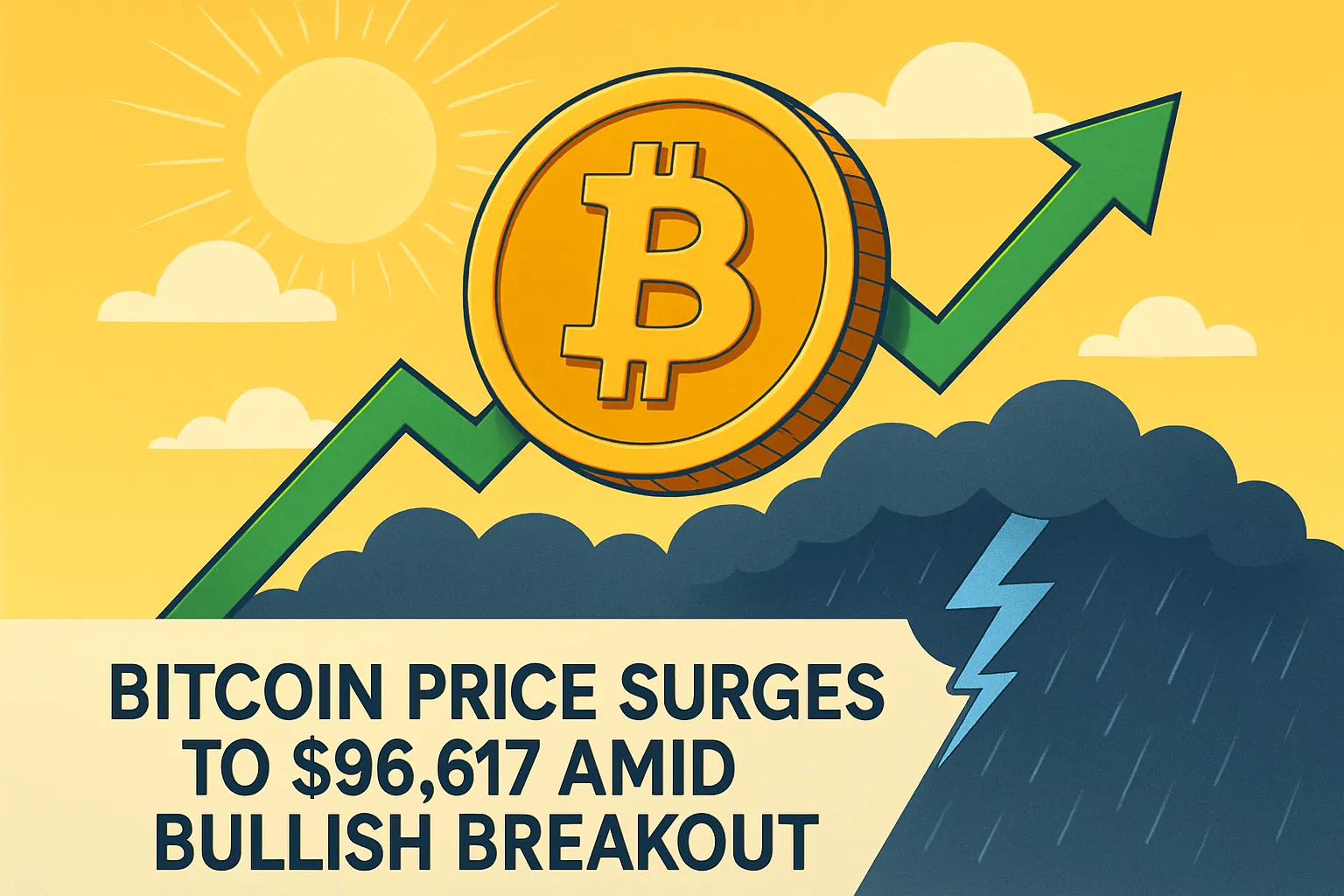
Bitcoin reached $96,816, its highest price since Nov. 14, 2025, after dipping to $92,026 in the past 24 hours, according to Bitbo data. The cryptocurrency traded around $96,484 at the update, with a 24-hour volume of 412,910 BTC, or about $39.89 billion, and a market capitalization near $1.92 trillion. It remains 23.59% below its all-time high of $126,277.05 set on Oct. 6, 2025.
U.S. spot bitcoin ETFs saw $1.25 billion in trading volume just 30 minutes into the day, with BlackRock's IBIT accounting for $976.92 million, or 77.69% of the total.
Network metrics included a hash rate of 927.09 EH/s, difficulty of 146.47T, and a block subsidy of 3.125 BTC.
The rally occurs amid escalating U.S.-Iran tensions. President Donald Trump announced a 25% tariff on countries trading with Iran, viewed as economic pressure and a potential military signal. Iranian officials stated readiness for "war or dialogue," while U.S. personnel withdrew from some Middle East bases. Regional diplomats and Israeli officials warned of increased likelihood of a U.S. strike, though details remain unclear.
Bitcoin Defies Trump Quarter Tariff: 19B Fall Wipeout Ghost Lurks
17h
EN
cryptoslate.com
Bitcoin Meteo
On January 12, President Donald Trump announced via Truth Social a 25% tariff on any country conducting business with Iran, effective immediately. Bitcoin (BTC) briefly dipped below $91,000 but recovered above $92,000 within hours, avoiding a liquidation cascade. As of press time, BTC traded near $94,000, up 1.5% over 24 hours, absorbing the geopolitical headline without systemic unwind.
This contrasts sharply with Trump's October 10, 2025, threat of a 100% tariff on China, which triggered over $19 billion in liquidations and a 14% BTC drop to $104,782. The difference stems from a credibility filter: January's announcement lacked formal documentation, executive order, or enforcement details from the White House, Federal Register, or Customs and Border Protection. Ongoing Supreme Court review of Trump's International Emergency Economic Powers Act (IEEPA) tariffs—ruled excessive by lower courts—further discounted it, with Polymarket odds at 27% and Kalshi at 31.9% for validation.
Market conditions aided resilience: CoinGlass data shows open interest at $62 billion, below October's $90 billion peak; funding rates stayed modest at 0.0003–0.0008%; Deribit noted a 10-point rise in implied volatility for hedges. Farside Investors reported $150 million in Bitcoin ETF inflows for January, offsetting sell pressure. Potential risks include oil price spikes (Brent at $64/barrel, WTI at $59.70) fueling inflation and higher yields, indirectly pressuring crypto via China-Iran trade ties.
Around mid-2023, at the Bitcoin Asia conference side event in Hong Kong, the author observed a vibrant mix of attendees, including many from the Chinese Mainland despite crypto bans there. China powered global Bitcoin for nearly a decade, dominating mining in Sichuan, Xinjiang, and Inner Mongolia due to cheap energy and hardware expertise. At its peak, over half of all Bitcoin was produced there, with transactions often routed through these regions. Major exchanges like Huobi, OKX, and Binance originated in China, shaping early crypto culture before relocating offshore.
Post-Ban Evolution and Youth Engagement
Crypto trading, mining, and token fundraising were fully banned in China amid scams, capital flight, and high energy use, accelerating after Ethereum's 2015 launch fueled speculation and "ge jiu tsai" (cutting chives) schemes. Blockchain remains encouraged as a strategic technology, with firms like Ant Group and Tencent advancing enterprise systems; China leads in patents and education. The digital yuan, a centralized blockchain-based CBDC, is tested in Beijing-Hong Kong cross-border trials. Hong Kong thrives as a regulated hub with licensed exchanges and events, serving as a "sandbox" for Mainland observation. Gen Z in both regions views crypto pragmatically for financial security amid economic pressures, following trends via WeChat, Weibo, and Bilibili despite restrictions. Owning crypto persists, though pathways shifted. In 2025, despite a bear market, crypto saw major institutional adoption and Bitcoin highs.
Bitcoin is down 27% from its all-time high of $126,000 in October 2025 and struggles to reclaim $100,000. As of January 14, 2026, at 11:24 PM ET, it has gained 5% year-to-date, trading above $90,000. CNBC's 2026 predictions range from $75,000 to $225,000, reflecting significant fear, uncertainty, and doubt (FUD).
Analysts vary widely: CoinShares forecasts $120,000–$170,000; Nexo predicts $150,000–$200,000; Bit Mining eyes $225,000; and Tom Lee of Fundstrat anticipates $250,000. Optimism stems from an improving macroeconomic outlook with lower interest rates and the Bitcoin supercycle thesis, expecting sustained growth under a Trump presidency via institutional inflows.
However, predictions lack strong ties to Bitcoin's blockchain fundamentals, suggesting correlation with equities, especially tech stocks. Hopes hinge on U.S. economic recovery and new crypto legislation like the 2025 Genius Act. Author Dominic Basulto, a Motley Fool analyst, warns of volatility but sees potential for Bitcoin to double to near $200,000 in 2026. A key catalyst could be the U.S. Treasury establishing a Strategic Bitcoin Reserve, as suggested by Cathie Wood of Ark Invest, amid midterm elections.
Rhode Island lawmakers have reintroduced a temporary Bitcoin tax exemption bill, Senate Bill S2021, on January 9, 2025, by Senator Peter A. Appollonio, referred to the Senate Finance Committee. The measure aims to reduce tax barriers for everyday Bitcoin use by exempting small-scale transactions from state income and capital gains taxes, up to $5,000 per month or $20,000 annually. It applies to Rhode Island residents and businesses, defining Bitcoin as a "digital, decentralized currency based on blockchain technology."
The exemption amends the state's personal income tax code, allowing self-certification on annual returns without reporting individual transactions, provided taxpayers maintain records for potential audits. Rhode Island’s Department of Business Regulation will issue guidance on recordkeeping and valuation using public Bitcoin price indices. Effective January 1, 2027, the pilot program sunsets on January 1, 2028, pending review of its fiscal impact.
Few U.S. states offer similar relief. Ohio is pursuing a "de minimis" exemption for small crypto purchases. In May 2025, New Hampshire's House Bill 302 authorized up to 5% of certain public funds for Bitcoin and large-cap digital assets. The bill treats small Bitcoin transactions like traditional money, not speculation.
Crypto.com & High Roller Tech Target Booming Prediction Bets
18h
FR
www.globenewswire.com
Bitcoin Meteo
On January 14, 2026, High Roller Technologies, Inc. (NYSE: ROLR), operator of premium online casino brands High Roller and Fruta, announced a binding Letter of Intent (LOI) with Crypto.com | Derivatives North America (CDNA), an affiliate of Crypto.com and a CFTC-registered exchange and clearinghouse. The exclusive partnership aims to launch event-based prediction markets in the United States through HighRoller.com, allowing users to trade contracts on finance, entertainment, and sports outcomes via a regulated, user-friendly platform. The mature market is estimated to exceed $1 trillion in annual trading volume, per EKG projections cited in next.io.
High Roller CEO Seth Young stated, “We’re thrilled to bring High Roller to the USA through this strategic partnership with Crypto.com,” highlighting the appeal of prediction markets and their distribution strengths. Crypto.com's Global Head of Predictions, Travis McGhee, added, “Crypto.com is a leader in prediction markets and we are thrilled to expand access... providing customers with a safe and regulated platform.”
The deal is subject to definitive agreements and targets a Q1 2026 launch, with Crypto.com as the exclusive provider. High Roller, a global iGaming operator with over 6,000 games from 90+ providers, focuses on innovative platforms. Crypto.com, founded in 2016, emphasizes cryptocurrency adoption and regulatory compliance. Forward-looking statements include risks, as detailed in High Roller's SEC filings for 2024 and Q3 2025.
What's Driving Today's Surge? XRP, BTC, DOGE, ETH Top 60-Day Rises
18h
EN
www.financemagnates.com
Bitcoin Meteo
Bitcoin surged 4.6% on Tuesday to $96,500—its strongest single-day gain in nearly 1.5 months—driven by cooling U.S. inflation (core CPI falling to 2.6% from 2.7%), $591 million in crypto short liquidations, optimism around the proposed CLARITY Act regulation bill, and spot Bitcoin ETF inflows jumping nearly 7x to $753.7 million. Ethereum rallied to $3,300, XRP gained over 5%, and Dogecoin soared 8%, showing coordinated market strength. Joel Kruger, crypto strategist at LMAX, noted the breakout above $95,000 signaled fresh buying interest amid rising trading volume.
On Wednesday, January 14, 2026, prices corrected modestly: Bitcoin at $95,120 (-0.28%), Ethereum at $3,296 (-0.81%), XRP at $2.13 (-1.77%), and Dogecoin at $0.1467 (-0.99%). Technical analysis reveals all four assets remain in a 2-month consolidation since mid-November, trading below key 200-day moving averages, preserving a bearish structure. For Bitcoin, the upper boundary ($94,000-$96,000) held firm after testing $96,500, with the lower boundary at $82,000-$85,000 (late 2025 lows) and 200 MA at $106,120 intact.
The analyst, with over a decade of experience, sees no fundamental change, expecting swings to lower targets: Bitcoin $74,000-$68,000 (April 2025 lows and weekly chart), Ethereum $2,600-$2,730, XRP $1.77 (December 19 lows), and Dogecoin $0.12 (early January 2026 lows). Despite macro tailwinds like Fed easing, deteriorating technicals suggest continued uncertainty.
The website fondsprofessionell.de requires user consent to use cookies for web analysis and advertising purposes. This consent can be revoked at any time. For economic reasons, the site serves as a digital advertising space for third parties. Users are directed to the privacy policy for details on data processing responsibilities held by the site operators.
Data Processing and Technologies
To provide services, fondsprofessionell.de employs technologies from partners (4 specified). Key purposes include personalized advertising and content, as well as measuring advertising performance and content effectiveness. Cookies, device identifiers (e.g., login-based, randomly generated, or network-based), or similar online identifiers are stored or read on the user's device. These are combined with other information such as browser type, language, screen size, and supported technologies to recognize the device upon subsequent app or website visits. This enables processing for one or more of the outlined purposes.
Bitcoin (BTC) surged past $94,500 for the first time since November, reaching $97,447.39 and briefly exceeding $97,000 during U.S. market hours on Wednesday, amid political turmoil in Venezuela and Iran that reinforced its safe-haven status. The rally, up 3% since Tuesday, liquidated around $500 million in short positions, contributing to over $680 million in total crypto futures liquidations over 24 hours, with bearish bets hit hardest. Open interest in BTC and Ether (ETH $3,379.38) futures rose over 4%, while speculative tokens like DOGE and FARTCOIN saw 10% and 13% increases, respectively. Funding rates hovered at 10%, and implied volatility indexes for BTC and ETH declined, supporting the price gains.
Altcoins outperformed, with DASH, OP, and ENA gaining over 10%; DASH posted its largest daily move since 2021, adding 28% since midnight UTC. XRP, BNB, and SOL rose 2.5%-4.1%, while ENA ($0.2458), TIA ($0.6093), PUMP exceeded 10%, and memecoins PEPE (+12%) and BONK ($0.0₄1196, +9.5%) surged around 22:00 UTC Tuesday. ETH trading volume jumped 83% to $34 billion. However, RSI indicators show overbought conditions for BTC, ETH, BNB, and SOL, signaling potential consolidation ahead of U.S. open at 14:30 UTC. On Deribit, BTC call options at $96,000, $98,000, and $100,000 saw high activity, though puts traded at a premium medium-term.
KuCoin achieved a record $1.25 trillion trading volume in 2025, averaging $114 billion monthly, capturing peak centralized exchange market share with balanced spot and derivatives activity exceeding $500 billion each. Altcoins dominated trading, sustaining engagement despite mid-year slowdowns. Crypto equities like Strategy rose over 8%, fueled by a criminal investigation into Fed Chair Jerome Powell, driving haven assets including gold, silver, and BTC.
Bitcoin (BTC) traded around $95,000 on Wednesday, January 15, 2025, following a 4.51% surge the previous day that closed above the key 61.8% Fibonacci retracement level at $94,253 (from April's low of $74,508 to October's high of $126,199). The rally was driven by improving risk appetite after the US Bureau of Labor Statistics (BLS) reported softer-than-expected core CPI of 2.6% year-over-year (YoY) in December, below the 2.7% forecast, while headline CPI matched consensus at 2.7% YoY. Monthly figures showed 0.3% headline and 0.2% core increases.
This data bolstered risk-on sentiment, pushing BTC to a daily high of $96,495—the highest since November 17—and lifting US equities to record highs. Institutional demand strengthened, with US-listed spot Bitcoin ETFs recording $753.73 million in inflows on Tuesday, per SoSoValue, the highest single-day figure since October 6.
Technical indicators support bullish momentum: daily RSI at 65 (above neutral 50 and rising), and MACD showing a bullish crossover with green histogram bars. BTC found support near $90,000 on January 8. If the rally extends, it could target $100,000; a correction might test $94,253 or the 50-day EMA at $91,858.
Market watchers await November US Retail Sales and October/November Producer Price Index (PPI) reports, which could influence the Federal Reserve's rate path and introduce volatility. K33 Research noted upcoming catalysts like tariffs, Fed independence, and crypto regulation, amid BTC's stagnant performance relative to the S&P 500, with the BTC/SPX ratio in three-month consolidation.
By Friday, BTC pulled back toward $90,000 amid fading institutional demand and net ETF outflows this week.
Lucky Soloists Nab 22 Crypto Hauls in Year – Fresh Mega Payout!
21h
EN
cryptoslate.com
Bitcoin Meteo
Solo Bitcoin Mining Persists Amid High Odds
On Jan. 13, 2026, a solo Bitcoin miner claimed a full block reward of 3.125 BTC plus fees, worth nearly $300,000 at Bitcoin's price of around $94,000. This win highlights the endurance of individual miners in a network dominated by industrial operations, with a hashrate of 1,024 EH/s as of mid-January 2026 (per Hashrate Index). A hobbyist with a 6 TH/s ASIC faces 1-in-170-million odds per block, yielding an expected wait of over 3,000 years, yet solo successes occur due to the Poisson process of independent probabilities.
Frequency and Infrastructure
Bennet's solo mining tracker records 22 verified solo blocks over the past 12 months, averaging 15.6 days between wins (up 29% year-over-year), totaling 69.35 BTC. Key examples include Block 920,440 on Oct. 23, 2025 (Public Pool, 3.141 BTC), Block 924,569 on Nov. 21, 2025 (CKPool, 3.146 BTC), and a Nov. 23, 2025 win with just 6 TH/s via CKPool. Services like Solo CKPool (20,950 users, 188 PH/s, 2% fee) and Public Pool (Umbrel open-source, no fee) enable full rewards without sharing. FutureBit's Apollo home miners have also notched wins.
Economic Realities
Solo mining offers high variance—full rewards or nothing—versus pools' steady payouts, with identical long-term expected value. It appeals to hobbyists and ideologues valuing the "lottery" thrill, despite weak profitability for steady income. As setup barriers drop via CKPool and Public Pool, more solo attempts boost visible jackpots, underscoring probability's indifference to Bitcoin's growing scale.
Bitcoin's price is trading around $95,194, up 3.62% or $3,327 from the previous close, with intraday highs of $95,929 and lows of $91,821. It operates within a $88,000–$95,000 range, recently approaching a multi-week high near $96,000 amid high volatility and trading volume, reflecting mixed market sentiment driven by inflation data, global events, and institutional activity.
Softer US inflation data has eased pressure on risk assets, boosting Bitcoin as investors shift from traditional finance, while global tensions position it as a volatile safe haven. However, resistance at $95,000–$96,000 persists due to whale sales, profit-taking, and stagnant periods. Spot Bitcoin ETFs show mixed inflows/outflows, with reduced day trader demand signaling a consolidation phase.
Analysts predict Bitcoin will surpass $100,000 by February 2026, but near-term volatility and horizontal movement are expected. A breakthrough above $96,000 could validate a bullish trend; otherwise, prices may retreat. Bitcoin remains the largest cryptocurrency by market value, highly sensitive to regulatory signals, macroeconomic news, and investor emotions.
Bitcoin is trading sideways in a consolidation pattern reminiscent of 2020, signaling potential expansion rather than weakness. On the 4-hour chart, BTC remains above the Ichimoku cloud, maintaining a positive short-term structure. Resistance caps upside at $92,300, while support holds between $91,200 and $90,900, with $90,500 as a critical pivot. A break below could target $89,200 or $86,300. Derivatives show rising open interest in futures, indicating trader commitment, though spot markets reflect defensive net outflows among larger holders.
This setup mirrors 2020's pre-volatility phase, where months of sideways action preceded major breakouts. Amid low volatility, capital rotates to utility-driven PayFi projects like Remittix, which has raised over $28.8 million by selling 701 million tokens at $0.123 each. Remittix's wallet is live on the Apple App Store (Android forthcoming), focusing on seamless crypto-to-fiat payments for remittances, freelancers, and small businesses. Its full PayFi platform launches February 9, 2026, bridging crypto and traditional finance. With limited tokens available via the RTX2026 promo code (200% allocation), Remittix complements Bitcoin by emphasizing value movement over storage, attracting investors positioning for adoption growth.
Negotiations continue on amending a 278-page crypto market structure draft ahead of a pivotal Thursday markup in the Senate Banking Committee. The fate of this landmark cryptocurrency legislation remains uncertain, as key Democrats indicate that new text unveiled by Republicans late Monday falls short of securing their support.
Senate Banking Chair Tim Scott released the draft, aiming for bipartisan backing to demonstrate its viability for full Senate passage. Democrats, however, are pushing for further changes, particularly on consumer finance and protection, raising the risk of a partisan vote.
Sen. Raphael Warnock, a Georgia Democrat on the committee and involved in the talks, stated, “We’re not there,” emphasizing, “We have concerns around consumer finance and protection.” He added, “Market structure needs to be done. But this cannot be rushed.”
The bill seeks to allocate oversight of crypto tokens between market regulators and integrate digital assets into the mainstream financial system. In a late Monday statement, Scott noted the text “reflects months of serious work, ideas, and concerns... and gives everyday Americans the protections and certainty they deserve.”
Bitcoin USD serves as the benchmark for cryptocurrency trading, representing Bitcoin's value in US Dollars as the world's first decentralized digital currency. It has revolutionized investor perceptions of money and digital assets through high liquidity, global accessibility, and growing adoption by traders, institutions, and long-term investors. Unlike traditional investments like the Bharat Coking Coal IPO, which offer stability tied to government-backed industrial enterprises, Bitcoin operates independently of central banks, exposing investors to a global system unaffected by local cycles but prone to volatility.
Key price influencers include market sentiment from social media and news, regulatory policies, institutional adoption by corporations and hedge funds, and technological advancements in blockchain and payments. Traded on multiple exchanges, Bitcoin USD enables short-term trading on volatility or long-term holding as an inflation hedge.
Risks encompass extreme price swings, regulatory uncertainty, and security vulnerabilities like hacks. In contrast, the Bharat Coking Coal IPO faces more predictable risks from domestic demand and operations. Investors can diversify by blending Bitcoin USD's high-growth potential with stable assets like the Bharat Coking Coal IPO for balanced portfolios leveraging innovation and reliability.
Crypto payroll involves paying salaries in blockchain-based digital currencies like stablecoins or Bitcoin (BTC), either fully, partially, or via fiat-to-crypto conversion at payment. It integrates with traditional systems for tax reporting and records, but heavy regulations on wages—ensuring tax withholding, minimum wage compliance, worker protections, and contract enforcement—make clear rules essential. Uncertainty in classifying digital assets as securities, commodities, or payments has caused caution among payroll providers, risking penalties without defined oversight.
Recent U.S. laws address this: the Guiding and Establishing National Innovation for U.S. Stablecoins Act (GENIUS Act) sets reserve, disclosure, and licensing standards for stablecoins as payment instruments. On July 17, 2025, the House passed the Digital Asset Market Clarity Act (CLARITY Act) with bipartisan support, clarifying SEC and CFTC authority over assets to reduce uncertainty. In Europe, the Markets in Crypto-Assets (MiCA) regulation imposes rules on crypto providers and stablecoin issuers, including capital and consumer protections. These frameworks enable crypto in payroll without mandating it, favoring stablecoins for their fiat-pegged stability over Bitcoin's volatility.
Stablecoins, backed by reserves like cash or government securities, simplify valuation, accounting, and tax reporting by aligning with fiat salaries, treated as payment tools with redemption rights. Bitcoin's price fluctuations complicate budgeting, require precise market-value tracking at payment, and trigger capital gains taxes on conversion, increasing administrative burdens. Regulated as speculative assets, Bitcoin lacks payroll-specific treatment, relying on niche providers versus mainstream stablecoin infrastructure from banks and fintechs. Employers must still meet documentation, social security, and audit obligations, treating crypto as a payment channel.
Bitcoin's relief rally gained momentum yesterday, with prices moving toward outlined targets amid low liquidity and volume, prompting caution as pumps without sustained volume signal risks. The rally squeezed nearly $600 million in shorts, totaling $686 million in liquidations, partly driving the upside from $89,000. Spot buyers entered significantly only at $93,000, indicating the move was accelerated by short squeezes flipping to market buys.
Short-term sentiment remains bullish, but medium- to high-timeframe views are bearish, approaching key resistance zones. The long-to-short ratio is balanced, with funding rates slightly negative, reflecting uncertainty. Daily exchange volume trends downward, needing multiple days or weeks of pickup for real momentum.
A poll shows 57% believe the relief rally is nearly over, versus views of a silent new bull run or 2026 super cycle, or a ranging market. Upcoming data includes January 14th retail sales and existing home sales, plus tomorrow's initial jobless claims, following expected CPI results. Deltas on High Block Capital are positive for BTC, ETH, and Solana.
I cannot summarize the provided content, as it consists solely of an authorization error message ("You don't have authorization to view this page") rather than an actual article about Bitcoin. No key points, dates, entities, or names from a Bitcoin market discussion are available to extract. If you provide the full article text, I'd be happy to create a clear, concise summary within 200 words.